Fear Based Insurance Marketing Tactics: Why I Refuse to Sell That Way
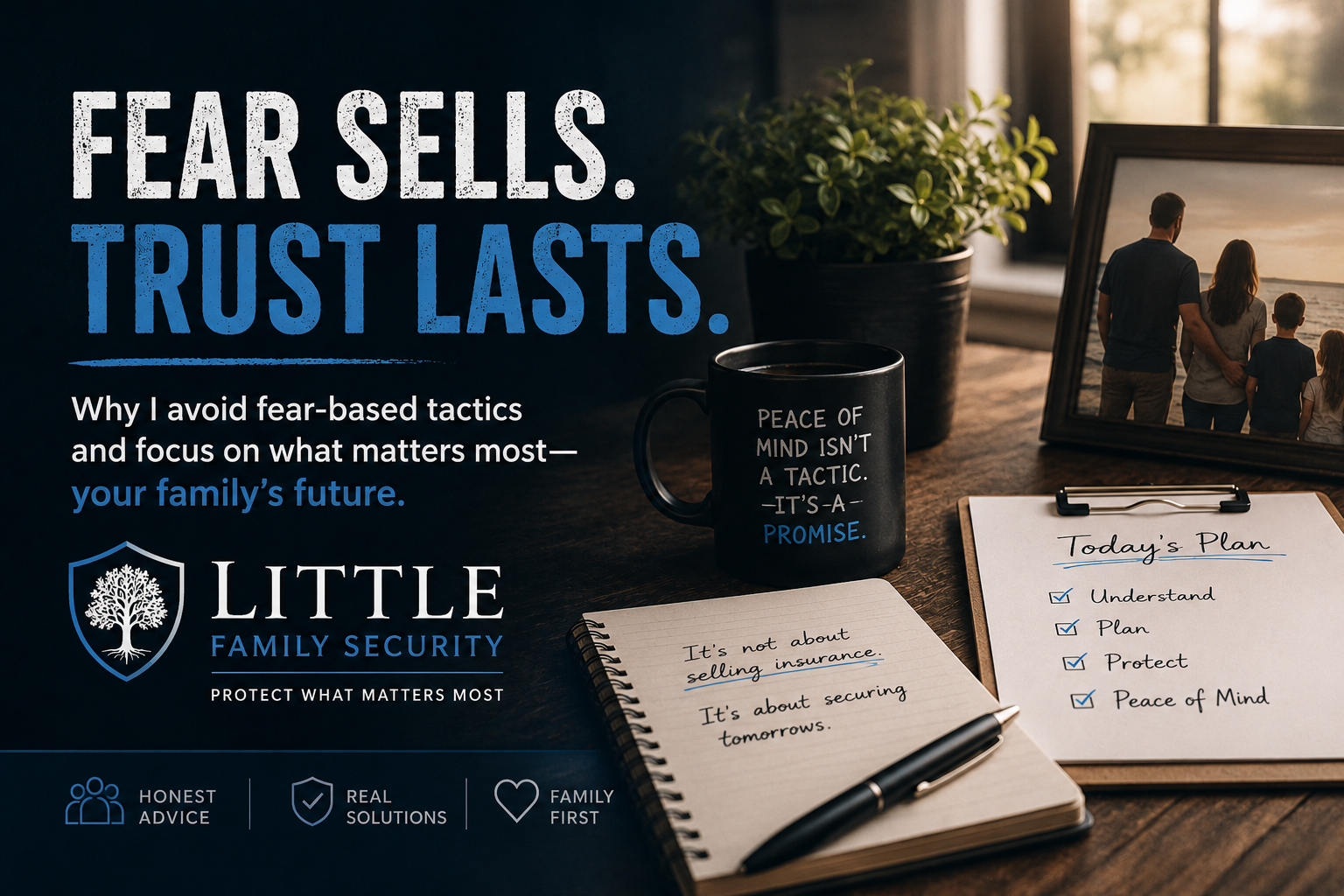
If you've spent any time online looking for life insurance, you've probably seen the ads.
"Your family could be left with thousands of dollars in debt."
"Don't leave your loved ones with funeral bills."
"What happens if you don't wake up tomorrow?"
I understand why those ads exist. Fear gets attention.
The problem is that attention and trust aren't the same thing.
As someone who writes horror fiction, I know fear is one of the most powerful emotions we have. I spend my weekends trying to make readers uneasy. During the week, though, I help families make financial decisions. Those are two very different jobs.
I've never wanted people to buy life insurance because I scared them into it. I want them to understand what they're buying and why it may make sense for their family.
Fear Gets Attention. Education Builds Trust.
Insurance exists because bad things happen.
That's simply reality.
But leading every conversation with worst case scenarios often causes people to shut down instead of opening up.
I've found that people are much more willing to have a conversation when they feel respected instead of pressured.
Instead of asking someone to imagine dying tomorrow, I'd rather ask questions like:
What would you want your family to have if something happened?
Do you already have coverage you're happy with?
Is there anything you've been meaning to review?
Those questions create a conversation instead of a sales pitch.
The National Association of Insurance Commissioners emphasizes consumer education and understanding insurance products before making decisions.
Fear Can Damage Long Term Relationships
One of the things I appreciate about working in this business is that insurance isn't usually a one time transaction.
People move.
Families grow.
Policies need updating.
Children become adults.
Someone who trusts you today may come back years later for another policy or refer a friend.
That relationship becomes much harder to build if the first conversation leaves them feeling manipulated.
I've had prospects tell me they were relieved I wasn't trying to pressure them. Those conversations don't always end with a sale, but they often end with someone willing to answer the phone the next time I call.
Planning Isn't the Same as Panic
There's nothing wrong with acknowledging reality.
Funerals cost money.
Mortgage payments continue.
Families still need groceries.
Those are practical conversations.
Where I think the line gets crossed is when marketing tries to manufacture urgency instead of helping people evaluate their actual needs.
The Consumer Financial Protection Bureau encourages consumers to compare financial products, ask questions, and make informed decisions rather than feeling rushed into major financial commitments.
The Best Insurance Conversation Feels Like Advice
I've always believed insurance works best when it feels like solving a problem together.
Sometimes that means someone already has excellent coverage.
Sometimes it means they only need a small final expense policy.
Sometimes it means they decide to wait.
I'm okay with that.
I'd rather someone make a decision they're comfortable with than buy something because I created enough fear to push them over the finish line.
That approach may not create the fastest sale, but I believe it creates better relationships.
Fear Has Its Place
Considering I write horror fiction, this might sound strange.
Fear has a purpose.
It reminds us to wear seat belts.
It reminds us to buy smoke detectors.
It reminds us to prepare for emergencies.
Life insurance falls into that same category.
Preparing for something unpleasant isn't pessimistic.
It's responsible.
The difference is whether the conversation is centered around helping someone prepare or making them feel guilty for not buying immediately.
That's a line I try hard not to cross.
Why My Approach Is Different
When someone reaches out to me, my goal isn't to convince them they should be afraid.
My goal is to help them understand their options.
If they already have good coverage, I'll tell them.
If another solution makes more sense, I'll say that too.
I'd rather build a reputation for honesty than become known as someone who can create the most fear.
Because long after the sales pitch is over, trust is what people remember.