Term vs. Whole Life Insurance in Plain English
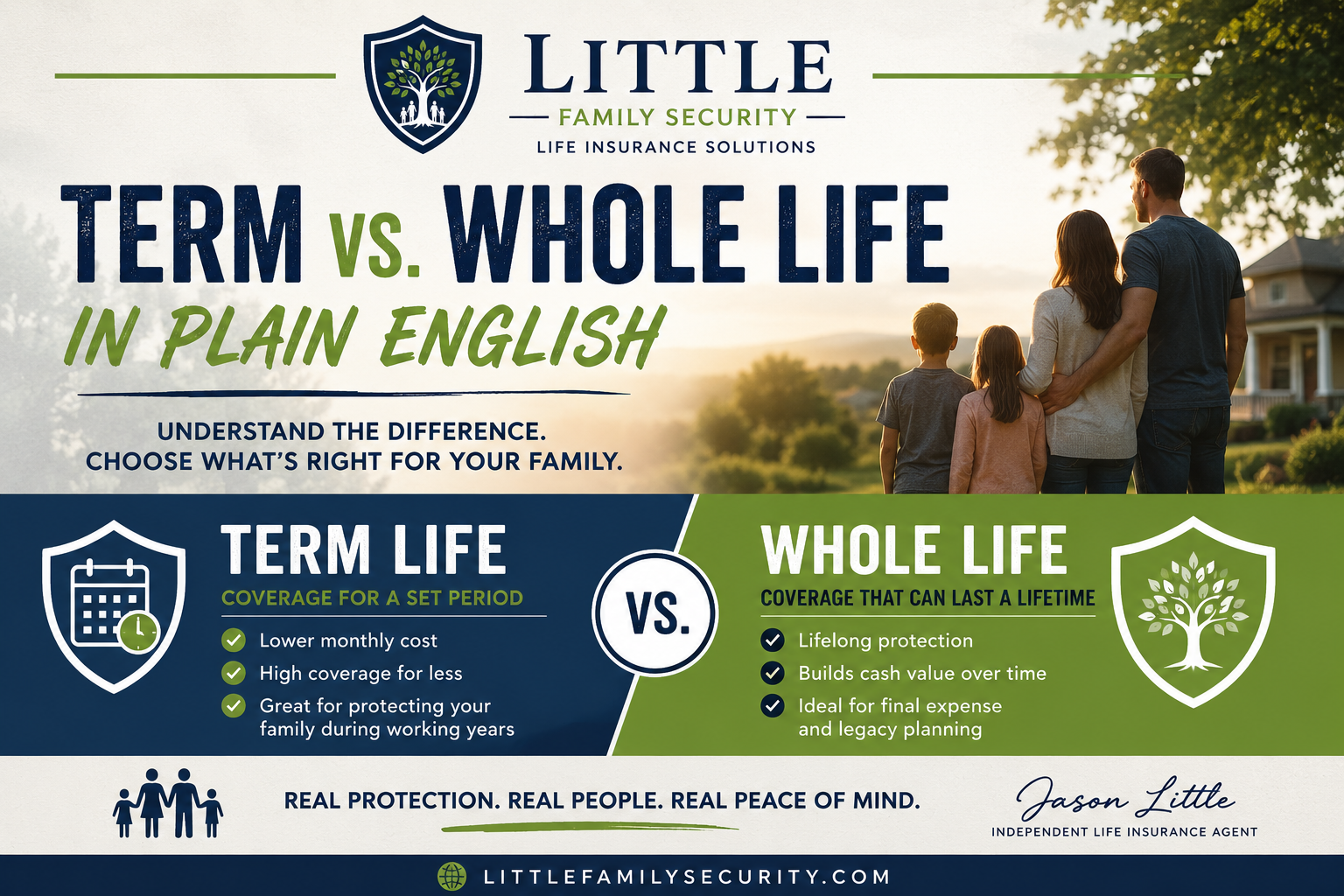
Term or whole life insurance? The better question is: What are you trying to accomplish?
If you've spent more than five minutes researching life insurance, you've probably run into the same debate over and over again.
Should you buy term life insurance or whole life insurance?
The truth is, neither one is automatically better than the other. They were designed for different situations. My job isn't to steer you toward one product. It's to help you understand which one actually fits your needs.
Let's simplify the conversation.
Think of It Like Renting vs. Owning
One of the easiest ways I've found to explain the difference is to compare life insurance to housing.
Term life insurance is a lot like renting an apartment. You pay for coverage during a specific period of time. When that period ends, your coverage usually ends unless you renew or convert it.
Whole life insurance is more like buying a home. As long as the premiums are paid, the policy is designed to stay with you for your entire life. Many policies also build cash value over time.
Neither option is right for everyone. The best choice depends on what you're trying to accomplish.
When Term Insurance Makes Sense
Term life insurance is often a great fit for families who need a larger amount of protection while raising children or paying off a mortgage.
For example, imagine you're thirty-five years old with two young children and a thirty-year mortgage.
Your biggest concern may simply be making sure your family can stay in the home if something happens to you before it's paid off.
In many cases, term insurance provides a significant amount of coverage at an affordable monthly cost.
That's one reason mortgage protection policies are so popular.
When Whole Life Makes Sense
Whole life insurance is commonly chosen by people who want permanent protection.
Many of my conversations revolve around final expense planning.
Families don't want to leave funeral costs, medical bills, or other final expenses behind for their loved ones. Whole life insurance is often well suited for that purpose because the coverage doesn't expire after twenty or thirty years.
I've also spoken with clients who simply like knowing they'll never have to worry about outliving their coverage.
That peace of mind matters to many families.
Don't Buy Based on Internet Arguments
One thing I've learned is that people become surprisingly passionate about life insurance.
You'll find articles insisting everyone should buy term insurance.
You'll find others claiming everyone should own permanent insurance.
Real life rarely works that way.
Every family has different goals, different budgets, and different responsibilities.
The right policy is the one that solves your specific problem.
Ask Questions Before You Decide
Whenever I speak with someone, I'm far more interested in asking questions than giving a sales presentation.
Who depends on your income?
Do you still have a mortgage?
Are your children grown?
Would your family struggle with funeral expenses?
How long do you want your coverage to last?
Those answers matter much more than choosing sides in an online debate.
The Best Policy Is One You'll Keep
I've seen people spend weeks comparing products without ever purchasing anything.
Meanwhile, life keeps moving.
The best life insurance policy isn't necessarily the one with the most features.
It's the one that fits your budget, protects the people you care about, and stays in force when your family needs it most.
If you're unsure where to start, that's exactly what conversations like this are for.
No pressure. No confusing insurance jargon. Just straightforward guidance so you can make an informed decision.